
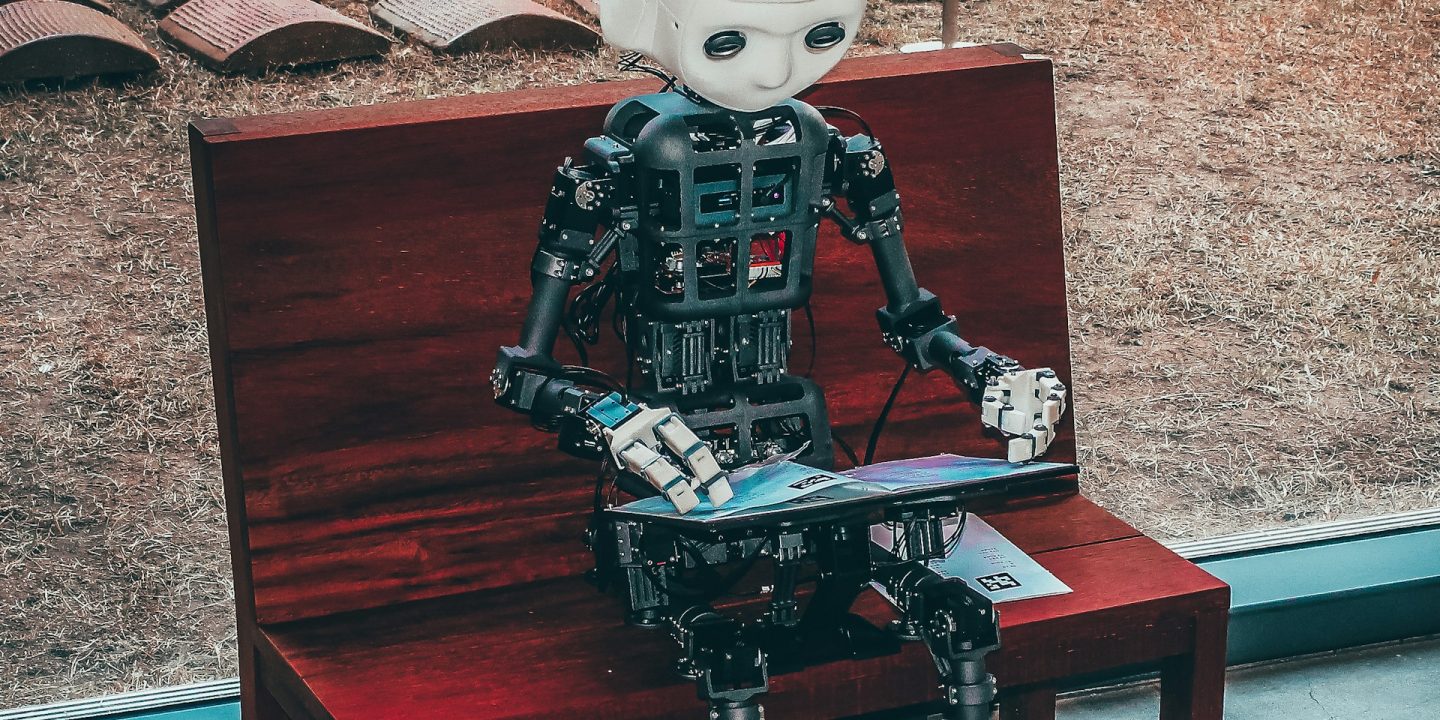
There is a dangerous moment in modern development: the moment you see a block of AI-generated code that looks absolutely perfect. It’s clean, it’s indented, and it runs without a single error. But beneath the surface, it’s often conceptually dead. It isn’t solving your problem; it’s just echoing a pattern it saw a million times in its training data.
This is the fundamental limit of LLMs: they are world-class Librarians, but they are not Architects. A librarian can find any book in the building and summarize it perfectly, but they cannot write a new theory of physics. Similarly, AI can synthesize every existing methodology, but it cannot invent a new one. It can’t imagine a solution that hasn’t already been published. Take the PHP 8.5 Pipe Operator—AI can tell you how the syntax works, but it cannot envision the new architectural patterns that feature unlocks until a human engineer does it first.
This is why AI cannot replace the top-tier engineer. The difference lies in the gap between implementation and innovation. An AI can implement a feature perfectly if the pattern already exists in its library. But innovation is the act of looking at a new tool—like a language update—and realizing it allows for a completely different way of structuring an entire system. That ‘leap’ of intuition requires a human understanding of trade-offs and the long-term evolution of a codebase—things a model cannot ‘calculate’ from training data.
So when does AI actually become a tool rather than a crutch? It happens when you cross the threshold of true proficiency—usually after a year of deep experience in a specific language and framework. This is where you stop asking ‘How do I write this?’ and start asking ‘Should I write this?’ For me, after five years with Flutter, the ‘Aha!’ moment came when I realized AI was brilliant at the boring parts—the repetitive Bloc boilerplate and state management files—but useless at deciding how the state should actually flow to ensure scalability.
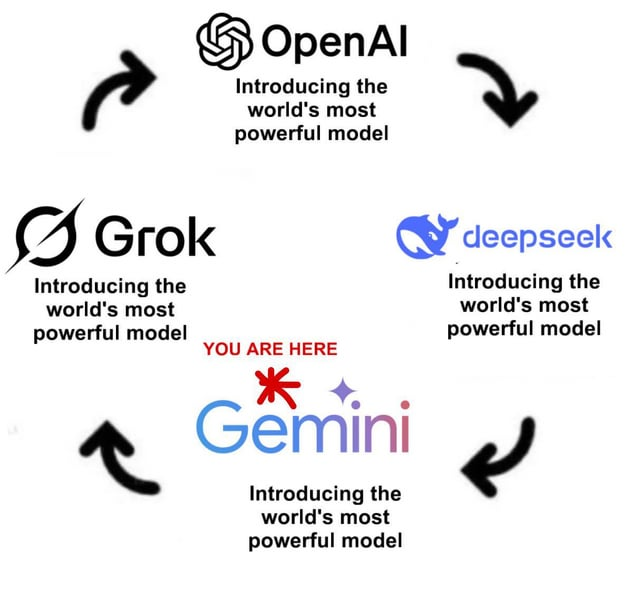
LLMs evolve rapidly, fueling a cycle of benchmarks and hype. But for professional development, version numbers are irrelevant. The true divide is between the ‘Vibe Coder’ and the ‘Real Engineer.’ While a Vibe Coder prompts until the code looks right, a Real Engineer uses AI to accelerate a pre-defined architecture. One gambles; the other crafts. A Real Engineer uses AI to replace the writing task, never the thinking process.
I built Morse specifically for the Architect, not the Vibe Coder. While tools like OpenCode or Pi are great for ‘vibing’ in a TUI, professional engineering requires a different kind of precision. Engineers need to map out complex logic, highlight critical dependencies across files, and leave architectural notes that a simple chat window can’t handle. Morse is designed to bridge that gap—giving you the speed of AI without sacrificing the control of a human lead.
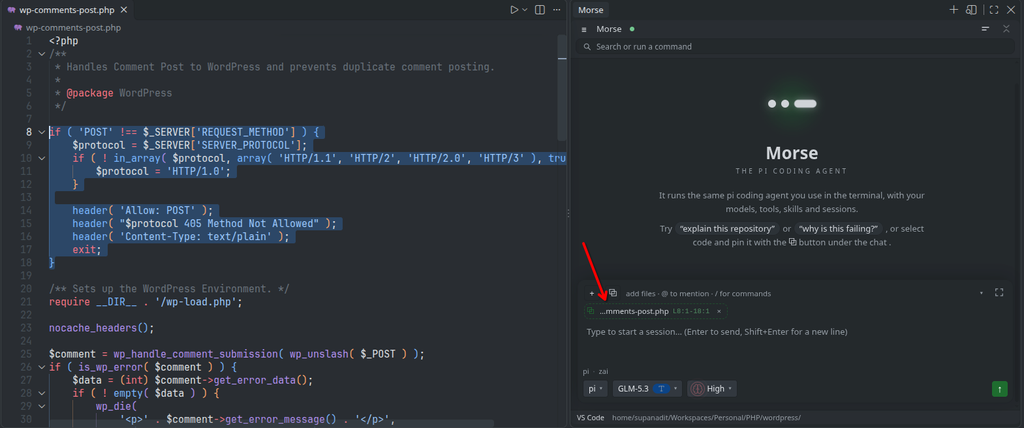
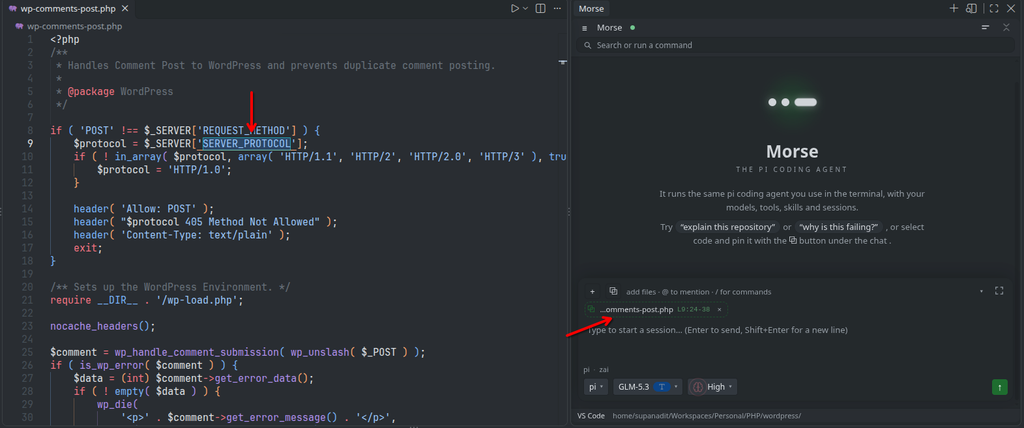
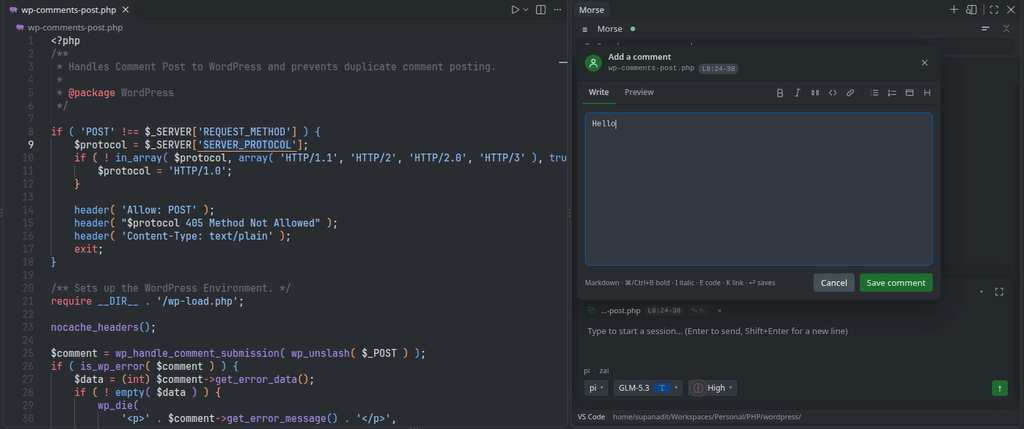
With Morse, the goal isn’t to let the AI take the wheel, but to give the developer a better dashboard. By combining AI-driven speed with human-centric capabilities for highlighting and mapping, any software developer can work faster and more intentionally. Because at the end of the day, the most valuable thing in a codebase isn’t the code itself—it’s the intentionality behind it.